TEST Post with Featured Image

Dr. J. Kameron Carter of Duke Divinity

‘Young, Bright Light’ of Theology Will Deliver the Redding Lecture Tuesday

Dr. J. Kameron Carter of Duke Divinity

Georgetown, KY — The Marshall Center for Christian Ministry of Georgetown College welcomes a theologian for Tuesday’s George W. Redding Endowed Lecture who is certain to engage our thinking about race and gender.

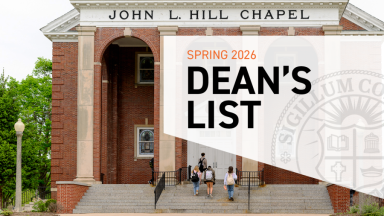
Dr. J. Kameron Carter, Associate Professor in Theology and Black Church Studies at Duke Divinity School, teaches courses in both theology and black church studies. His free lecture at 11 a.m. (Sept. 27) in John L. Hill Chapel is entitled “On the Politics of the Christian Life: Thinking with Du Bois and Karl Barth.”

Marshall Center executive director Ken Holden became especially excited about the speaker when Dr. Mark Medley of the Baptist Seminary of Kentucky said to him, “J. Kameron Carter is coming here?!! Why, Dr. Carter is one of the young. bright lights in theological study in America today.”

Working as a theologian, Dr. Carter addresses the basic areas of Christian thought, especially attending to Christology (the person and work of Jesus Christ) and theological anthropology (the human being in Christian perspective).

Dr. Carter investigates the complex forms of identity (especially around race, gender, and nationalism) that have come to mark us all. He is particularly interested in the implication of Christian theological thought forms and the specific deployments of Christianity’s social imagination in these identity and social formations, the formations we inhabit.

Kameron Carter is the author of Race: A Theological Account (New York: Oxford University Press, 2008). A forthcoming book by Dr. Carter is entitled The Secular Jesus: Religion and the Project of Civilization (Yale University Press).

George Walker Redding – for whom this lecture is named – was a much loved member of the Georgetown faculty for 30 years (1943-73).  Dr. Redding taught courses in Bible and chaired what became the Religion Department. After retiring from the College in 1973, he continued to teach until his death in 1989. In 1997, Georgetown College inducted the 1927 graduate into its Hall of Fame.

Homecoming 2011: Be Part of GC History!

All Homecoming 2011 events will be special in their own way, but it’s not often you get to witness a new residence hall dedication – especially with the historical name of “Rucker” that stirs so many emotions.

We’re expecting a lot of “Rucker girls” to attend the dedication of the new Rucker Village at 11 a.m. Homecoming Saturday (Sept. 24) and tell some tales of what took place in that beloved Romanesque Revival behemoth known as Rucker Hall. We hope alumni of all ages will be pleased with and proud of the 14 two-story, brick townhouses on Dudley Avenue behind Collier and Allen halls.

In the spirit of old Rucker – which was torn down in 1971 to make way for “modern residence halls” – Dr. Juilee Decker’s Curatorial Class has prepared an exhibition that focuses on the buildings and other spaces on campus.  “From the Ground Up: Georgetown College’s Spaces and Places” will be on view all weekend as it’s in the first-floor hallway of the Ensor Learning Resource Center known as the Cochenour Art Gallery. But, Decker hopes alums – especially those fascinated by GC history – will swing by at noon Friday (Sept. 23) and meet her nine students who worked so hard and have some refreshments.

Tier One Georgetown College Climbs in U.S. News Rankings

Georgetown, KY (Sept. 13) – In U.S. News & World Report’s annual survey of top national liberal arts colleges and universities announced today, Georgetown College again was listed as a tier one institution and higher by 11 places (at No. 151) than a year ago.

“The most important distinction is that we are a top tier NATIONAL liberal arts college,” Georgetown Provost Rosemary Allen said. “That’s an elite group and that separates us from the regional institutions.”

Dr. Allen noted that the College, several years ago, chose to be compared and ranked nationally in the U.S. News listings. That meant that Georgetown College could no longer be ranked regionally. (In 1994, Georgetown was ranked No. 11 among Southern Regional Liberal Arts Colleges – 10 spots higher than the year before.)

The Provost added, “We still have things to work on as we build our national reputation. That’s the road we are on
and we’re getting there.”

Vice President for Enrollment Garvel Kindrick was also encouraged to be recognized nationally in these prestigious U.S. News rankings, but, he said, “We’re even more excited by that publication’s recent revelation that Georgetown College was in the ‘Top 10 Colleges That Lead to Graduate School’.”

“Our Admissions counselors out on the road touting this about college ‘outcomes’ are getting very enthusiastic reactions from high school guidance counselors,” Kindrick said. “Guidance counselors have known Georgetown College’s reputation for getting its students jobs or into graduate school and they see this ranking as verifying that.”

Dr. Allen was particularly pleased that Georgetown College was recognized for preparing students for graduate school.  “The capacity to get into grad school is one of the more important things an institution can give its students,” Dr. Allen said of the No. 10 ranking. “Our high level of acceptance rate is testimony not only to the quality of education our students receive, but also the personal investment our faculty make in writing quality letters of recommendation.”

In a separate ranking, the magazine listed Georgetown No. 110 in a survey of guidance counselors from America’s Best High Schools for national liberal arts colleges they think offer the best undergraduate education to their students.

The U.S. News rankings are based on a formula that takes into account measures of academic quality including graduation rates, peer assessments among colleges and academic-reputation surveys by high school counselors.

Coach Tubby Smith Tips Off ‘Conversations’ Sept. 26

Tubby Smith

Tubby Smith

Don’t forget, University of Minnesota basketball coach Tubby Smith – a man with a reputation for character-building and the last coach to bring an NCAA basketball title to the University of Kentucky (’98) – is certain to jumpstart Year 2 of Billy Reed’s “Conversations with Champions” on Sept. 26.

All of these free, “fireside chat” events will be held in John L. Hill Chapel at 7:30 unless otherwise noted. Here’s the rest of the 2011-12 “Conversations with Champions” line-up thus far:

Oct. 5 – Seth Hancock, who syndicated Secretariat for a record $6 million in ’72

Nov. 9 – John Carroll, multi Pulitzer Prize-winning newspaper editor whose Lexington Herald-Leader won the ’86 award for its investigation of UK basketball transgressions

Nov. 22 – Angelo Dundee, trainer of young boxing champion Cassius Clay (later Muhammad Ali). Note the special time and place: 2 p.m. in the Richard & Karen Ward Room of the Ensor Learning Resource Center. This is also part of this fall’s College for a Day event.

March 7 – Tori Murden-McClure, author, adventurer (the first woman to row alone across the Atlantic) and now President of Spalding University in Louisville.

Reed, an acclaimed sports columnist and editor formerly with the Louisville Courier-Journal and senior writer for Sports Illustrated, also hopes to have UK football coach Joker Phillips as a guest sometime in February and University of Louisville Athletic Director Tom Jurich in April. All of the “Conversations with Champions” will again be filmed for airing on Kentucky Educational Television.

Last year, Reed joined former Gov. Martha Layne Collins as the College’s second Executive Scholar-in-Residence.  He heads up the College’s new Academy for Character in Sport, which will be seeking public involvement as we attempt to be leaders in a national discussion on restoring character, ethics and integrity to (especially) college athletics. Follow Reed’s blog and more at http://acs.georgetowncollege.edu

ï»ż