Georgetown’s Office of Diversity Presents: Zycron Founder and Chairman D. Freeman

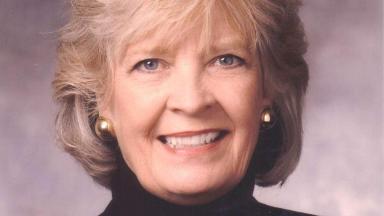
Darrell Freeman

Darrell S. Freeman Sr., the immediate past chairman of the Nashville Chamber of Commerce and chairman of Zycron, Inc., an information technology services and solutions in the Tennessee capital city, has already tasted a lot of success in his life. On Tuesday, Feb. 16 at 6:30 p.m. he will share some of his story in a free talk – “There’s a See of Success in All of Us! – at Georgetown College’s Thomas & King Conference Center (East Campus).

“What I think this audience – students and anyone else who attends – will come away with is: That if someone is committed to a dream, all things are possible,” said Brian Evans, executive director of the College’s Office of Diversity. This first of several related events this semester is co-sponsored by Georgetown’s Ambassadors of Diversity and the Harper-Gatton Leadership Program.

Speaker Freeman founded Zycron in 1991 in Nashville and now the company employs more than 200 IT professionals across the country.

Freeman is also the co-founder of two other businesses: Reliant Bank and Pinnacle Construction Partners. As co-founder and co-organizer of Tennessee-based Reliant Bank, Freeman serves on the Board of Directors, the Audit and Compensation Committee, and the Executive Loan Committee. Reliant Bank is one of the fastest growing banks in Williamson County. He is also the co-founder and chairman of Pinnacle Construction Partners which provides a full range of preconstruction planning and construction management services for the public and private sector.

Freeman’s commitment to the Nashville community is evident through his recently completed, two-term service as immediate past chairman of the Nashville Chamber of Commerce. He is a current board member of Centennial Medical Center, and as former chairman of the 100 Black Men of Middle Tennessee, he led the organization to achieve chapter of the year in 2005.

Other organizations for which Freeman serves or has served on the board are: Stone Crest Medical Center, Nashville Community Foundation, the Nashville Downtown Rotary Club, the Federal Reserve Advisory Board, the African American Museum of Music Art and Culture, Middle Tennessee State University Board of Trustees and the Nashville Broadband Task Force.

Freeman’s favorite pastimes include spending time with Gloria, his wife of 18 years, and his four children Ebony, Kenya, Darrell Jr. and Nathan. He is an avid runner and has completed nine marathons and numerous half marathons. He is an instrument rated pilot with more than 900 hours. And he is a pilot for Angel Flight, which is an organization that arranges free air transportation for charitable and medical needs. Golf and history are also two of his favorite hobbies.

Freeman holds a bachelor’s and a master’s degree from Middle Tennessee State University.


Jim Durham
News Bureau Director

Tuesday’s Blood Drive Challenge Is Bigger Than Beating Campbellsville

GC basketball players Gina Beining and Emily Drees (in uniform) are double-teaming a mammoth effort begun by (then) point guard Katie Filiatreau ’09 last year — the Blood Drive Challenge. The duo urges the whole “Georgetown family” to help them beat Campbellsville in this charitable “competition” for the American Red Cross – one that can saving lives.

This drive is particularly timely with so much need in earthquake-ravaged Haiti. In fact, a percentage of blood donated will go to Haiti, said Donor Recruitment Representative Brian Tyler (above), who was outside the Caf Tuesday helping Gina sign-up donors.

Your time to show support and give blood is Tuesday (Feb. 2) from 10:30 a.m. to 4:30 p.m. in the Hall of Fame Room in the Cralle Student Center. But, if you don’t mind a lengthy wait, it’s better to make a reservation. Do so by contacting Gina at (419) 604-0649 or gbeinin0@georgetowncollege.edu.

Two drawings for gift-cards will also be held to those who donate.

Beining is a 6-foot forward from Ottoville, OH, near Lima; Drees is a 6-2 forward from Crescent Springs, KY, and out of Covington’s Notre Dame Academy.


Jim Durham
News Bureau Director

KET’s College Financial Aid Call-In Will Be Repeated Friday and Sunday

Deadlines Alert!!!

Individual colleges set their own deadlines for applying for scholarships. In Georgetown’s case, the deadline for institutional scholarships is Monday, February 1. Also, many families file the FAFSA – the Free Application for Federal Student Aid. This form asks for information about your family’s finances and allows a college to determine if students qualify for additional grants, low-interest loans, or work study funds. In Kentucky, the state’s priority deadline is March 15, but Georgetown College encourages families to get the FAFSA filed no later than March 1.

rhyan_conyers01

Parents and their high school seniors (and juniors) who are planning to attend college, if you happened to miss KET’s annual “live” College Financial Call-In earlier this week tune in to a repeat showing on KET KY. The Kentucky Channel (check your local listings) will air it at 2:30 p.m. on Friday (Jan. 29) and again at 4 p.m., Sunday (Jan. 31.)

Let the experts help you figure out how to pay for that all-important education.

Rhyan Conyers, our Financial Aid Director at Georgetown College since 2002, is on the panel of experts for the second straight year. The other panelists are: Shelley Park, Financial Aid Director, Eastern Kentucky University; Runan Pendergrast, Financial Aid Director, Bluegrass Community & Technical College; and Becky Gilpatrick of the KHEEA (Kentucky Higher Education Assistance Association)

Conyers, who has been with his alma mater’s financial aid operations since he graduated from Georgetown in ’97, loves to hear from the students themselves. “Most of the inquiries we get in our office come from parents,” he said. “But it’s great to talk to students and learn more about what’s on their mind.”

The three most pressing questions high school students and their parents have about financial aid, he said, are:

  1. Is going to college going to be affordable for my family and me?
  2. What determines how much aid I will get?
  3. What if something bad (like job loss, high medical expenses, etc.) has happened with my family? Can I still afford to go to college?

We then asked Conyers, now our Assistant Vice President for Enrollment & Student Financial Planning, to pinpoint some of the biggest issues.

Question: What SHOULD high school students and their parents KNOW as they start looking at Financial Aid for college?

Conyers’ Answer: They should know that every student and family situation is different, and that most colleges have systems in place to account for those differences. I find many families who make assumptions about college costs based on the published tuition/room/board price, or based on what one of their friends paid, or based on an online calculator. Their attempts to determine how much a college is going to cost are significant and well-intentioned, but ultimately they should know that their financial aid award will be based on lots of individual factors, and they won’t really know how much an individual college is going to cost until they receive an official award letter.

Question: Is there anything they should know about their own family finances before they begin talking to Fin-Aid offices?

Conyers: I encourage parents to have heart-to-heart conversations with their students about what they can afford, if anyone is willing to borrow, and the sacrifices that might be necessary. But before that stage, parents and students should do their best to figure out the type of college that is going to best suit their needs. That means visiting colleges together and discussing the pros and cons of each institution.

Question: Do you recommend parents hire a financial aid consultant….OR are most college Fin-Aid offices able to simply walk parents through the process?

Conyers: I suppose it depends on how much personal attention the family needs and how much they’re willing to pay for that extra personal attention. At many colleges like Georgetown, most financial aid offices are well-equipped to sit down with a family and talk them through the process from start to finish, and we’re glad to do that. But, some families feel like they need an independent outsider (like a consultant) to help guide them through the process and/or to help a family act as a stronger advocate on behalf of the student.

Question: Would it be too soon for the parents of a middle-chooler to call in to and/or listen to this show?

Conyers: If the parent is looking for nuts and bolts responses about how the process works, then it probably is too early. Financial aid programs have changed so much just in the 8+ years I’ve been in the field, so I can’t imagine what they will look like in another 8 years when a middle-chooler is looking at college. My best advice to that group is that they go ahead and talk with an investment advisor, banker, or other professional to see what their options are for saving for college. It always costs less money to save now than to borrow later, and the parents of a middle-schooler still have some time to save money for college.

More About Rhyan Conyers

Georgetown’s Assistant Vice President for Enrollment and Student Financial Planning, he has directed the college’s financial aid operations since August 2002. A former Fulbright Scholar (one of 21 at GC since 1990!), Rhyan is a 1997 Georgetown College graduate and 1999 graduate of Vanderbilt University. He resides in Georgetown with his wife, Nicole Larkey Conyers (GC grad 2000, UK law school 2003) and son, Ephraim, age 5.

Asked if they already saving for Ephraim’s college, Rhyan said:

“Even though our son is only five years old, we’re surprised by the amount we’re able to save by contributing only small dollar amounts on a monthly basis. Some plans allow a person to contribute as little as $25 at a time. For families that start early enough, this can really add up over time.”

Jim Durham
News Bureau Director

Music Faculty Recital is Such a Show You Can Hear it Twice!

musicfaculty

For the first time the Georgetown College Music Department will present their annual Faculty Showcase Recital twice – Sunday (Jan. 31) at 3 p.m., with the public in mind; and Tuesday, Feb. 2 at 11 a.m., primarily for the campus community. But, both free performances in John L. Hill Chapel are open to the public.

The two concerts are essentially the same, including pianist Mami Hayashida playing Chopin’s Ballade No. 3 in A-flat Major (op. 47) in tribute to the 200th anniversary of the famous composer’s birth.

Soprano Heather Hunnicutt will close both concerts with “a loud and ornamental” rendition of an aria from Verdi’s “La Traviata.” This number, Dr. Hunnicutt says, goes from “contemplative to barn-burner.”
A Muller piece will open Sunday’s concert (only) with Glenna Metcalfe on the Baroque console organ accompanying Pete LaRue’s trombone solo.

Representing the Music faculty above are, from left: Mami Hayashida, Sonny Burnette, Heather Hunnicutt, Pete LaRue and H.M. Lewis. Others scheduled to perform are soprano Rebecca Miller, pianist Lori Smith, and (Tuesday only) flutist Jana Flygstad.

Jim Durham
News Bureau Director

Professors Wargelin, Stevens Share Curry Award for Faculty Excellence

curryaward

Dr. Bill Stevens, Dr. Rosemary Allen and Dr. Cliff Wargelin

The Curry Award for Faculty Excellence is one of three significant ones awarded to Georgetown College faculty members each year. Tuesday (Jan. 26) at Founder’s Day Convocation, Provost Rosemary Allen said that choosing the co-chairs of the General Education Task Force – Dr. Cliff Wargelin, Professor of History and Chair of the department, and Dr. Bill Stevens, Association Professor of Biology – to share this recognition for 2010 was only fitting.

“I appointed these two about five years ago (soon after I became provost) to try to re-start the process of reforming our general education program and aligning it with the needs of our current students,” Dr. Allen wrote in an e-mail. “We hadn’t had a successful change in our general education program in over 30 years – and our program was antiquated and unresponsive to the interests and needs of our students.  But curriculum is VERY hard to change, especially since it is common for faculty to see changes in the general education program as a threat to their departments and their jobs.

“But these two figured out a way to work together to construct a process that would include as many faculty as possible in the revision process, thus building a sense of ownership among the full faculty,” she continued. “These two are so different in nearly every way – and in learning to work together, they started to build a theory of how to bring together the various constituencies involved in the general education process.”

She went on to explain that after a year of initial work and research, they brought additional faculty onto the process, forming the Task Force that had representatives from all five divisions. Wargelin and Stevens then devised a development process that involved nearly two thirds of our faculty as active participants in the design of the curriculum.

Said the Provost, “This is an extraordinary achievement – and it was truly a joint achievement.”

Leading up to the announcement of Wargelin and Stevens before a large Hill Chapel audience, Dr. Allen said:

“This year, the award goes to two outstanding teachers, both of whom have received accolades from students. One is described as “a great teacher—challenging, funny, and always willing to help students in whatever way he can.” The other is described as “A dedicated, genuine teacher who deeply cares about teaching and his students.” Both are serious scholars in their respective disciplines.  But the key reason for this award comes from their combined five-year endeavor to bring about curriculum reform in general education. Through careful research, inspired leadership, and selfless dedication of time and effort, they succeeded in bringing the faculty to consensus on a contentious issue.”

Allen said that a Faculty Committee determined there would be co-winners this year and that Wargelin and Stevens were nominated together by several people.

The Curry Award for Faculty Excellence is named in honor of Dr. Ralph Curry and Dr. Gwen Curry, two long-time leaders of the Georgetown College faculty and former chairs of the English department.  The award is intended to recognize three elements of faculty life that were important to the Currys: service to faculty, excellence in scholarship, and dedication to students.

The other two significant faculty awards the Provost alluded to are  the John Walker Manning Award, presented at opening convocation in the fall to a faculty member who excels in mentorship of students.  The Don B. and Chris Kerr Cawthorne Excellence in Teaching Award is presented at commencement to the faculty member who is recognized as the best teacher.

But, the Curry award, she said “is special because it gives us an opportunity to recognize faculty who combine excellent teaching and academic research with the very important behind-the-scenes work of faculty committees and the special projects that are part of our institutional tradition of shared governance.”

Jim Durham
News Bureau Director